Mechanical Diagnosis & Therapy (MDT)

Finding the Source of Pain Through Movement and Clinical Reasoning:
At Castine Concierge Physical Therapy, our goal is not just to reduce pain, it’s to understand where symptoms are truly coming from and help patients move forward with clarity and confidence.
One of the primary clinical systems we use is Mechanical Diagnosis & Therapy (MDT), commonly known as the McKenzie Method. MDT is not simply a set of exercises; MDT is a structured framework for clinical reasoning and assessment which helps identify the mechanical source of pain and guide targeted, individualized treatment. This treatment is rooted in careful observation of symptom behavior with repeated and sustained movements.
This article focuses on:
What MDT is and how it works
How MDT is implemented in clinical practice
Why identifying the true source of pain matters
How MDT helps differentiate symptom origin, including insights from the EXPOSS study
Why thorough clinical assessment is essential in physical therapy, especially given the prevalence of asymptomatic findings on imaging
What Is Mechanical Diagnosis & Therapy (MDT)?
Mechanical Diagnosis & Therapy (MDT) was developed by physiotherapist Robin McKenzie and emphasizes how symptoms change in response to specific movements and positions. The guiding principle of MDT is:
Symptom behavior, not imaging or anatomy alone, informs diagnosis and treatment.
MDT uses:
Repeated movement testing
Sustained postures
Careful monitoring of symptom response over time
These allow clinicians to identify meaningful patterns and tailor treatment precisely to the patient’s presentation. MDT prioritizes:
Strong clinical reasoning
Patient education
Active self-management from the patient
The goal is to identify patterns in symptom response that allow clinicians to classify the condition and determine the most appropriate course of care (McKenzie & May, 2003). MDT emphasizes precision in assessment, ongoing reassessment, and patient education and self-management — aligning closely with CCPT’s concierge model of individualized, efficient, and outcome-driven care.
How MDT Is Implemented: Assessment → Classification → Treatment
Mechanical Assessment
The MDT evaluation begins by observing how a patient’s symptoms change with specific repeated movements or sustained postures. Patients may be guided through spinal or extremity movements while their symptom response is closely monitored.
Key clinical questions include:
Do symptoms improve, worsen, or remain unchanged?
Do symptoms centralize or spread?
Is there a consistent movement direction that reduces symptoms?
This is called a Directional Preference. This is clinical phenomenon associated with the classification of a derangement where specific repeated movements or sustained postures result in a lasting improvement in symptoms (pain reduction or centralization) and/or a gain in range of motion
When present, a directional preference becomes a powerful guide for treatment.
Classification
Based on mechanical response, patients are classified into MDT syndromes such as:
Derangement (has a directional preference)
Dysfunction
Postural
Other / non-mechanical presentations
MDT classification is not subjective guesswork. Research has shown high inter-rater reliability among trained MDT clinicians, supporting its consistency as a diagnostic framework (van Helvoirt, Tempelman, van der Vet, van der Vet, van Helvoirt, Rosedale & Apeldoorn, 2024)
Targeted Treatment and Self-Management
Once classification is identified, treatment becomes highly specific to that individual. If a directional preference is identified, exercises are chosen and implemented because they are shown — in real time — to influence symptoms.
A defining feature of MDT is its emphasis on patient independence. Patients are taught strategies they can use outside the clinic, often leading to faster progress and greater confidence (Lam, Strenger, Chan-Fee, Pham, Preuss & Robbins, 2018).
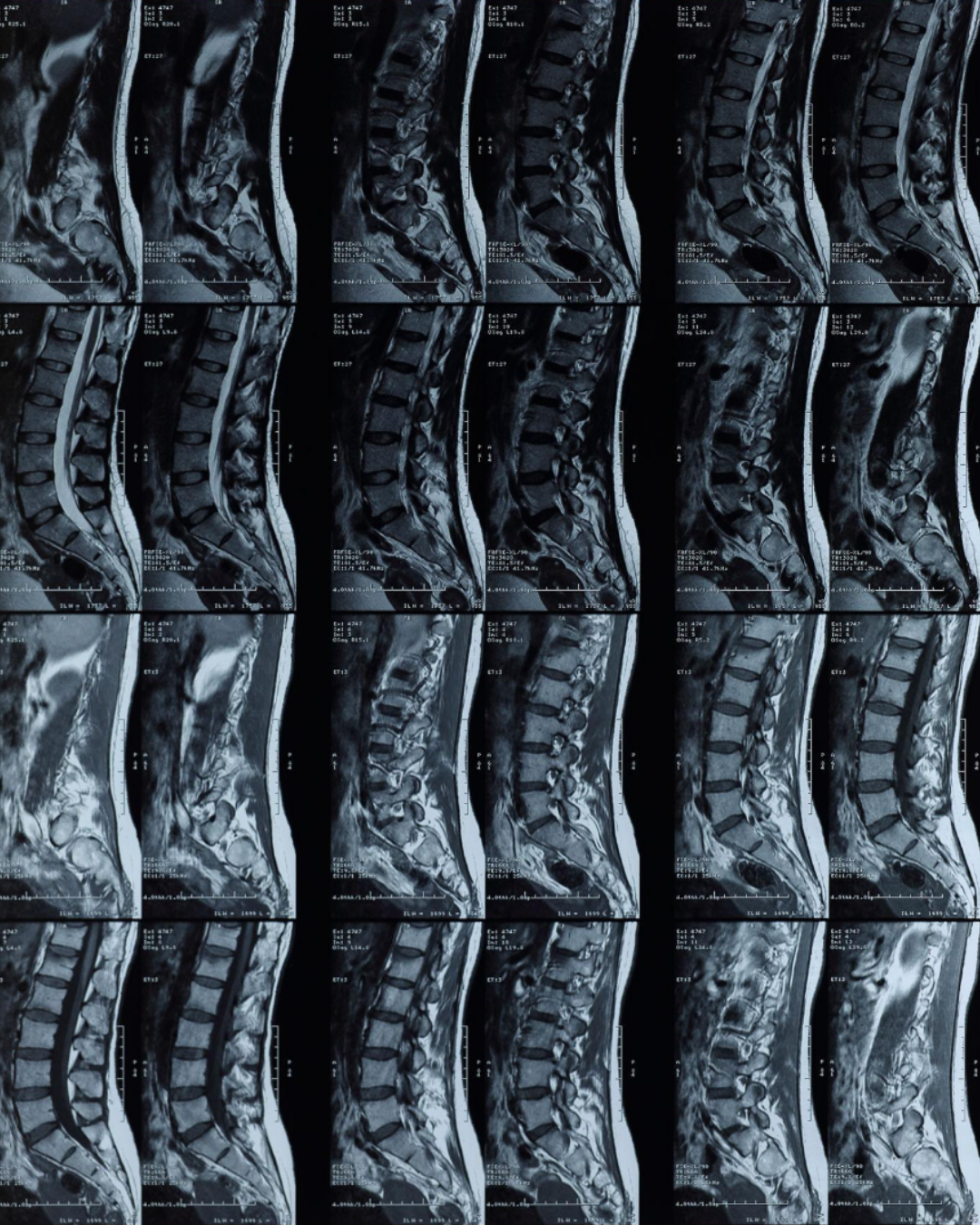
Why Identifying the True Source of Pain Matters
Symptoms do not always originate where they are felt. For instance, pain in a shoulder, hip, knee or ankle may originate from the spine or another region entirely. This concept is central to MDT and is structured to help identify these patterns.
The EXPOSS Study
The Extremity Pain of Spinal Source (EXPOSS) study examined over 350 patients presenting with isolated extremity pain and found that over 40% had a spinal mechanical source driving those symptoms, despite minimal or absent spinal pain. (Rosedale, Rastogi, Kidd, Lynch, Supp & Robbins, 2019).
Key takeaways from EXPOSS include:
Location of pain may not always = origin of the pain
Spine-directed MDT assessments can help identify the driver of symptoms if it isn’t local, even when extremity pain predominates
Ensuring treatment is directed at the true source is key as that will yield better outcomes than interventions focused only on where pain is felt
This reinforces the clinical value of and importance of a movement-based assessment in determining what to treat, not just where it hurts.
The Importance of Thorough Clinical Assessment in Physical Therapy
MDT is one structured way to perform a thorough clinical assessment but the broader principle applies to all high-quality physical therapy care.
Why? Because modern research consistently shows that structural findings alone do not reliably explain pain.
Research shows that structural findings on imaging are common in people without pain, particularly as age increases. Systematic reviews have demonstrated that many people with no pain or disability show findings on imaging such as:
Disc degeneration
Disc bulges or protrusions
Facet joint changes
Age-related spinal changes
These findings increase with age and are often part of normal human variation rather than indicators of injury or dysfunction.(Brinjikji et al., 2015; Brinjikji et al., 2015)
Key takeaways from this literature review include:
Prevalence of disc degeneration in asymptomatic individuals increased from 37% of 20-year-old individuals to 96% of 80-year-old individuals
Prevalence of disc bulges in asymptomatic individuals increased from 30% of those 20 years of age to 84% of those 80 years of age
Prevalence of disc protrusion in asymptomatic individuals increased from 29% in those 20 years of age to 43% in those of 80 years of age
Prevalence of Annular fissures in asymptomatic individuals increased from 19% of those 20 years of age to 29% of those 80 years of age.
This occurrence of artifacts in the asymptomatic population is not isolated to the spine. Cooper et al., assessed 50 elite climbers (age range, 20-60 years) without any symptoms of shoulder pain and identified MRI evidence of:
Tendinosis of the rotator cuff, subacromial bursitis, and long head of the biceps tendonitis (exceptionally common) at 80%, 79%, and 73%, respectively.
Labral pathology in 69% of shoulders, with discrete labral tears identified in 56%.
Articular cartilage changes (also common), with humeral pathology present in 57% of shoulders and glenoid pathology in 19% of shoulders.
Because of these factors, imaging alone cannot determine:
Whether a finding is clinically relevant
Whether it explains a patient’s pain
How symptoms should be treated
This is why a comprehensive clinical assessment involving history, movement testing, symptom behavior, and functional evaluation is essential, regardless whether MDT or another evidence-based framework is used. Without it, there is a real risk of:
Treating incidental findings rather than meaningful impairments
Over-medicalizing normal age-related changes
Missing the true mechanical source of symptoms
Whether using MDT or another evidence-based framework, clinical reasoning must guide care, not isolated data points.
A Balanced Perspective
MDT is not a universal solution. Not every patient demonstrates a clear directional preference, and not all symptoms are mechanically driven. One of MDT’s strengths, however, is that it helps identify when it is appropriate and when alternative approaches are needed(Cherkin et al., 2018).
At CCPT, MDT is integrated with:
Strength and conditioning principles
Load management
Manual therapy when appropriate
Performance-based rehabilitation
The goal is not to apply a single method rigidly, but to use the right approach at the right time.
Final Thoughts
Mechanical Diagnosis & Therapy offers a structured, evidence-based way to understand pain through movement and clinical reasoning. When combined with a thorough assessment and individualized care, MDT helps clinicians identify the true source of symptoms and guide patients toward meaningful, lasting improvement.
For patients who value clarity, efficiency, and understanding, MDT provides a framework that supports all three.
When to Contact Castine Concierge Physical Therapy:
If you’re dealing with pain, stiffness, or an injury that isn’t improving the way you expected, that’s a good time to reach out.
You should consider contacting Castine Concierge Physical Therapy if:
Pain has lasted more than 1–2 weeks without meaningful improvement
Symptoms are traveling into an arm or leg
You’ve had imaging but still don’t feel clear on what’s actually causing your pain
You’ve tried rest, stretching, or generic exercises without success
You want to avoid unnecessary injections, medications, or surgery
You value one-on-one, uninterrupted care in your home
You don’t need a catastrophic injury to benefit from physical therapy. Often, the earlier we assess a problem and identify its true source, the faster and more confidently you can return to the activities that matter most to you.
If you’re unsure whether we’re the right fit, reach out. A quick conversation can help determine your next best step. Our mobile, in-home orthopedic physical therapy service can help.We create personalized strength, mobility, and movement programs tailored to your goals, delivered directly in your home across the DC, Maryland, and Northern Virginia region.
Are you ready to feel better?
Written by: Nathan Castine, PT, DPT, OCS, Cert. MDT
References
Lam, O. T., Strenger, D. M., Chan-Fee, M., Pham, P. T., Preuss, R. A., & Robbins, S. M. (2018). Effectiveness of the McKenzie Method of Mechanical Diagnosis and Therapy for Treating Low Back Pain: Literature Review With Meta-analysis. The Journal of orthopaedic and sports physical therapy, 48(6), 476–490. https://doi.org/10.2519/jospt.2018.7562
Van Helvoirt, H., Tempelman, H., van der Vet, P., van der Vet, F., van Helvoirt, J., Rosedale, R., & Apeldoorn, A. (2025). Reliability of the McKenzie Method of Mechanical Diagnosis and Therapy in the examination of spinal pain, including the OTHER classifications: Reliability of the McKenzie Method in spinal pain. Brazilian journal of physical therapy, 29(1), 101154. https://doi.org/10.1016/j.bjpt.2024.101154
Rosedale, R., Rastogi, R., Kidd, J., Lynch, G., Supp, G., & Robbins, S. M. (2020). A study exploring the prevalence of Extremity Pain of Spinal Source (EXPOSS). The Journal of manual & manipulative therapy, 28(4), 222–230. https://doi.org/10.1080/10669817.2019.1661706
Brinjikji, W., Luetmer, P. H., Comstock, B., Bresnahan, B. W., Chen, L. E., Deyo, R. A., Halabi, S., Turner, J. A., Avins, A. L., James, K., Wald, J. T., Kallmes, D. F., & Jarvik, J. G. (2015). Systematic literature review of imaging features of spinal degeneration in asymptomatic populations. AJNR. American journal of neuroradiology, 36(4), 811–816. https://doi.org/10.3174/ajnr.A4173
Brinjikji, W., Diehn, F. E., Jarvik, J. G., Carr, C. M., Kallmes, D. F., Murad, M. H., & Luetmer, P. H. (2015). MRI Findings of Disc Degeneration are More Prevalent in Adults with Low Back Pain than in Asymptomatic Controls: A Systematic Review and Meta-Analysis. AJNR. American journal of neuroradiology, 36(12), 2394–2399. https://doi.org/10.3174/ajnr.A4498
Cooper JD, Seiter MN, Ruzbarsky JJ, Poulton R, Dornan GJ, Fitzcharles EK, Ho CP, Hackett TR. Shoulder Pathology on Magnetic Resonance Imaging in Asymptomatic Elite-Level Rock Climbers. Orthop J Sports Med. 2022 Feb 11;10(2):23259671211073137. doi: 10.1177/23259671211073137. PMID: 35174249; PMCID: PMC8842184 https://pmc.ncbi.nlm.nih.gov/articles/PMC8842184/