Movement Matters: How Daily Motion Keeps Your Joints Healthy and Pain-Free

How Daily Motion Keeps Your Joints Healthy and Pain-Free:
Have you ever noticed how your knees or hips feel stiff after sitting for a long time, but loosen up once you start moving? That’s not a coincidence. Your joints rely on movement to stay healthy. Regular activity nourishes the tissues inside your joints, supports cartilage, and helps reduce inflammation throughout the body. Movement isn’t just good for your muscles, it’s essential for your joints as well.
How Your Joints Work:
Your joints are more than simple hinges. Inside each one, there are a structures that work together to create smooth, pain-free motion:
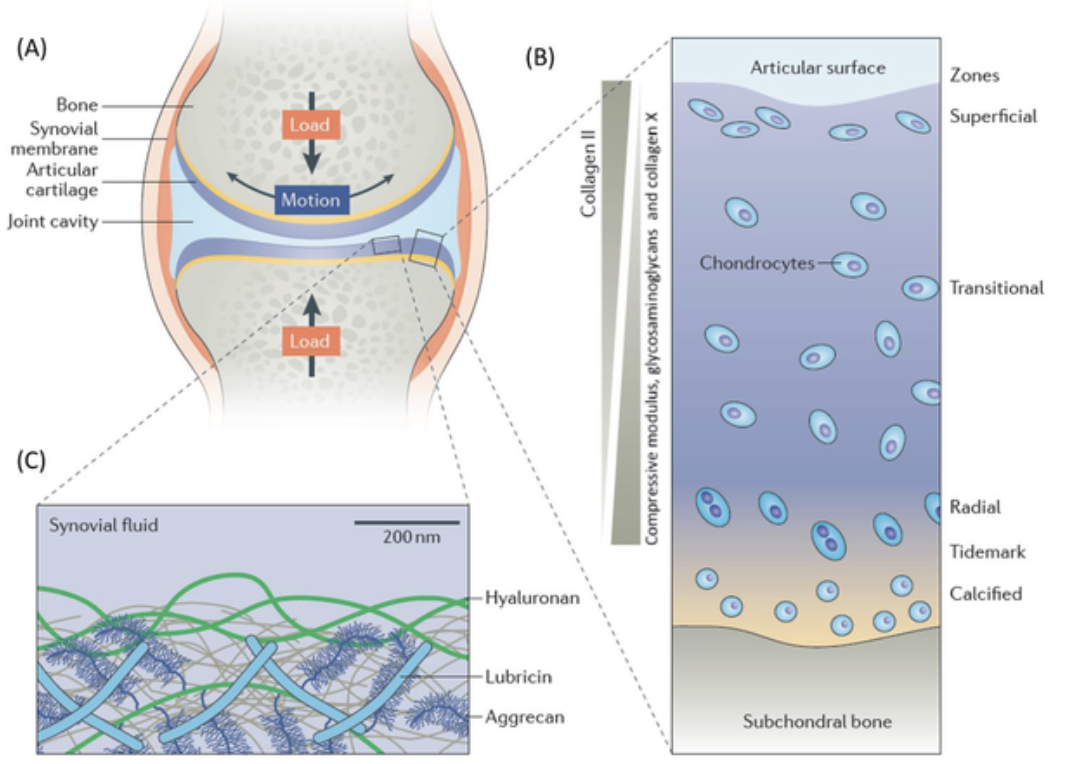
Cartilage: This is a specialized connective tissue that covers the end of your bones providing a smooth low friction surface allowing for easy effortless movement. It also acts as a shock absorber and distributes the load across the joint to shield bones from damage.
Quick Fact: Cartilage doesn’t have a direct blood supply. It depends on the movement of synovial fluid to bring in nutrients and remove waste products.
Synovial fluid: a thick, slippery liquid that acts like your body’s natural joint oil. This fluid nourishes the cartilage with nutrients like oxygen and glucose and removes metabolic waste.
Muscles, tendons, and ligaments: provide stability and help distribute forces evenly.
How Joints “Eat” and Why Movement Helps:
When you move, whether it’s walking, stretching, or bending, your joint surfaces gently compress and release. This motion “pumps” synovial fluid through the cartilage, much like squeezing and releasing a sponge. This movement stimulates chondrocytes (cartilage cells) through a process called mechanotransduction [1].
Mechanical loading, the natural compression and decompression that happens during movement, occurs in order to receive nutrients and remove waste. Human MRI studies show that even simple activities like squatting can temporarily compress cartilage by about 5%, helping circulate nutrients into the tissue [2]. When cartilage is loaded, fluid pressure increases and drives synovial fluid deeper into the cartilage layers. This brings oxygen and vital nutrients to cells that would otherwise be too far from the joint surface to access them.Over time, regular loading helps maintain cartilage thickness and quality [3].
What Happens When Joints Don’t Move:
Prolonged rest, bedrest, or immobilization (like a cast) causes fast, measurable negative changes:
cartilage thinning
weaker collagen organization
increased breakdown of enzymes
reduced joint lubrication
more stiffness and pain upon returning to activity
These effects can appear quickly, sometimes in days to weeks. Without regular loading, nutrient transport slows, especially in deeper cartilage layers, leading to reduced cellular activity and potential long-term tissue degeneration [4, 5].
Movement Reduces Inflammation:
Regular, moderate physical activity also lowers systemic inflammation. A meta-analysis shows that aerobic exercise reduces inflammatory markers such as CRP and IL-6, both associated with joint degeneration [6]. Lower inflammation supports a healthier joint environment and may reduce pain over time.
Now, you might be thinking about the long-term impact, the dreaded "wear and tear," or the notion that "exercise wears out your joints." The truth: moderate movement is actually protective, not harmful for your joints. In fact, inactivity is far more likely to accelerate stiffness and degeneration. It's true that some research has shown that very high volumes of weight-bearing exercise may increase the risk of osteoarthritis but primarily in people with low lower-limb muscle mass [7]. This highlights the importance of strength training to help muscles absorb load and protect your joints.
Movement vs. “Working Out”:
Supporting your joints doesn’t always require a gym membership. Small, consistent movements throughout your day make a big difference. Think:
Standing up every hour at your desk
Taking short walks
Doing gentle stretches or mobility exercises
Incorporating low-impact activities like cycling, swimming, or yoga
In general, you want the “little and often” rule: 2-3 minutes of movement every 30–60 minutes throughout your day is often better than a single, intense session when it comes to joint health.
Gentle, consistent loading (walking, cycling, mobility work) keeps cartilage nourished. Too little loading (inactivity) limits nutrient flow and weakens tissue. Too much loading (high-impact or repetitive stress) can cause microdamage to the joint. Physical therapists often call this the “Goldilocks zone” of joint loading, not too much, not too little, just right to keep cartilage healthy and resilient.
The Bottom Line
Your joints are dynamic structures that thrive on movement. Daily motion keeps synovial fluid circulating, nourishes cartilage, supports surrounding muscles, and helps keep inflammation in check.
By simply moving a little more throughout your day, you can protect your joint health for years to come.
When to Contact Castine Concierge Physical Therapy:
If you’re experiencing…
stiffness lasting more than 30 minutes in the morning
pain with stairs or prolonged sitting
discomfort that interrupts daily activities
pain after an injury or surgery
…our mobile, in-home orthopedic physical therapy service can help.We create personalized strength, mobility, and movement programs tailored to your goals, delivered directly in your home across the DC, Maryland, and Northern Virginia region.
Are you ready to feel better?
Written by: Nathan Castine, PT, DPT, OCS, Cert. MDT
References
Leong, D. J., Hardin, J. A., Cobelli, N. J., & Sun, H. B. (2011). Mechanotransduction and cartilage integrity. Annals of the New York Academy of Sciences, 1240(1), 32-37. https://pmc.ncbi.nlm.nih.gov/articles/PMC5007871/
Van Ginckel, A., et al. Effects of in vivo exercise on ankle cartilage deformation and recovery in healthy volunteers: an experimental study. Osteoarthritis and Cartilage, 2011;19(10):1123–1131. https://doi.org/10.1016/j.joca.2011.06.009
Del Río E. (2025). Thick or Thin? Implications of Cartilage Architecture for Osteoarthritis Risk in Sedentary Lifestyles. Biomedicines, 13(7), 1650. https://pubmed.ncbi.nlm.nih.gov/40722722/
Maldonado, M., & Nam, J. The role of changes in extracellular matrix of cartilage in the presence of inflammation on the pathophysiology of osteoarthritis. Biomedical Reports, 2013. https://pmc.ncbi.nlm.nih.gov/articles/PMC3771246/
Eckstein, F., Burstein, D. and Link, T.M. (2006), Quantitative MRI of cartilage and bone: degenerative changes in osteoarthritis. NMR Biomed., 19: 822-854. https://doi.org/10.1002/nbm.1063
Fedewa MV, Hathaway ED, Ward-Ritacco CL. Effect of exercise training on C reactive protein: a systematic review and meta-analysis of randomised and non-randomised controlled trials. Br J Sports Med. 2017 Apr;51(8):670-676. doi: 10.1136/bjsports-2016-095999. Epub 2016 Jul 21. https://pubmed.ncbi.nlm.nih.gov/27445361/
Wu Y, Boer CG, Hofman A, Schiphof D, van Middelkoop M, Szilagyi IA, Sedaghati-Khayat B, Bierma-Zeinstra SMA, Voortman T, van Meurs JBJ. Weight-Bearing Physical Activity, Lower-Limb Muscle Mass, and Risk of Knee Osteoarthritis. JAMA Netw Open. 2024 Apr 1;7(4):e248968. doi: 10.1001/jamanetworkopen.2024.8968. https://pmc.ncbi.nlm.nih.gov/articles/PMC11061770/